Thursday, October 3, 2019

Horrible Histories: Measly Middle Ages


You will have to have some kind of subscription service that streams Horrible Histories in order to watch the clips I've provided. I use Amazon Prime. Those links that I have used here are from youtube and add historical points to the silliness.


  1. Season 2, Episode 10-  0:37-4:37; The Bayeux Tapestry and Miserable Songs
  2. Season 1, Episode 5-  5:09-9:52; Domesday Survey Book; no more Anglo-Saxons, you're now French!
  3. Medieval Knights
  4. Season 3, Episode 2-  0:37-4:45; Nasty Knights, Castles, Sieges
  5. Top Ten Weird Facts about Medieval Castles
  6. The Tower of london
    1. built by William the Conqueror during the 1080s
    2. classic Norman architecture
    3. used as a residence, an armory, and most well known, a prison
    4. today it contains the collections:
      1. the royal armories
      2. the royal mint
      3. crown jewels
      4. for 600 years the Tower housed the menagerie of exotic animals given to the kings and queens; ostriches, elephants, lions, polar bears, etc.
    5. Ravens
    6. Those that oversee the Tower are called Yeoman Warders, and the one who takes care of the ravens is the Ravenmaster.
    7. During the reign of Charles II (1630-1685), the king decreed that at least six ravens be kept at the Tower to protect the kingdom. Today seven are kept-- six and a spare.
      1. The ravens are employed as "soldiers of the kingdom".
      2. They can be dismissed for bad behavior.
      3. There is a raven graveyard and the names of the deceased Tower ravens are engraved on the memorial.
  7. Tour of the Tower of London
  8. The Ravens at the Tower of London
  9. York, England: Medieval England's Second City
  10. Season 1, Episode 10-  14:28-18:12; Hamlin, Plague Song

British Literature: The Middle Period

Week two of eight for History of British literature. What follows are the slides from the PowerPoint presentation and the links precede the slides that would be a playable video. Someday I'll take the time to further educate myself on embedding PowerPoint presentations with embedded video, but it is not this day. This will have to suffice... considering I'm not a couple of weeks behind. 


How the Normans Changed the History of Europe


Ely Cathedral (1083), Wells Cathedral (1174), Tower of London (1078)


A Mini Guide to Medieval Castles: English Heritage


Chivalry in the Middle Ages


War, plague, chivalry... influenced literature of this period.


  • Geoffrey of Monmouth (1100-1155)
    • Historia Regum Brittaniae
    • inaccurate history
    • popularized the legend of King Arthur
    • made Excalibur popular
  • Magna Carta (15 June 1215)
    • King John and his barons at Runnymede
    • a feudal document, revised several times over hundreds of years
    • the 1297 version is housed in Washington D.C. at the National Archives
    • was adapted in the colonies, and used it to justify the disagreement over the Stamp Act in 1765; lead the way to the Declaration of Independence
  • Robert Mannying
    • English Chronicler; wrote the Story of England
    • Handly Synne: the first Confessional/manual in English
  • Geoffrey Chaucer (1340-1400)
    • lived under three monarchs; born during the reign of Edward III in London, lived through the succession of Richard II in 1337 and the revolution of 1399, which saw Richard II deposed, and the beginning of the Tudor Dynasty (the Lancastrians) with William IV.
    • died in 1400 and is buried in Poet's Corner at Westminster Abbey
    • called the "morning star of the Renaissance"
    • Canterbury Tales
      • made the Middle English vernacular a legitimate form of literature when the dominant literary languages in England were Latin and French
  • Pearl Poet or "Gawain Poet"
    • contemporary of Chaucer
    • true identity unknown
    • best known Arthurian Tale: Sir Gawain and the Green Knight
  • Robert Cotton and the Cotton Nero A.X. (1571-1631)
    • dissolution of monasteries under Henry VIII brought the destruction of many monasteries and churches throughout Britain
    • manuscripts scattered
    • Robert Cotton began collecting manuscripts; Beowulf and Sir Gawain and the Green Knight
    • His method of shelving his collection is still used today in the British Library, naming the bookcases after Classical characters with the accompanying bust of the character; Beowulf located at Vitellius, Sir Gawain and the Green Knight, as well as the Lindisfarne Gospels located at Nero.


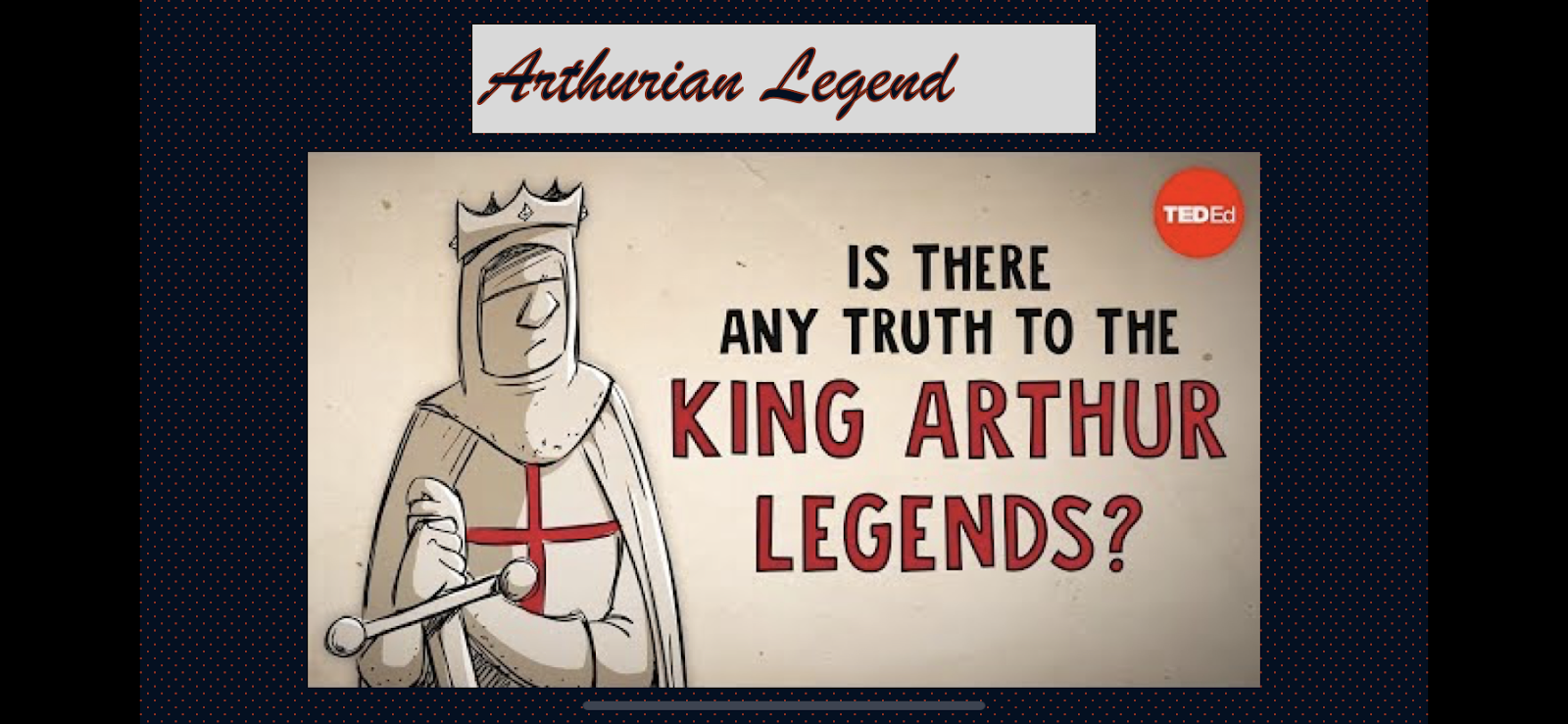
Is There Any Truth to the King Arthur Legends? 


Morality, Miracle, and Mystery Plays

The Church used these plays to instruct an illiterate population; hear and see instructive literature.


  1. Morality Play: presented a lesson about good conduct and character
  2. Miracle Play: re-enactment of miraculous interventions by the saints into the lives of ordinary people
  3. Mystery Play: focused on Bible stories and society


Sunday, September 15, 2019

European Literature: Nordic


Today's focus is on Iceland, Finland, and Denmark. Simply because of my personal interests and not for any serious academic reason.


We can't have a Miranda class without Crash Course History and John Green. He pops up often in my lectures.


Icelandic literature is unique in that the language never evolved in ways the languages of mainland Europe did. They were an insular society that was not subjected to cultural clashes that come from other conquering, not Norse speaking, people. Today's Icelandic language is close enough to Old Norse that there aren't many difficulties in reading and understanding it. Unlike the English language where we see Old English and it's literally a foreign language.

The Codex Regius is the Icelandic codex where many Old Norse poems have been preserved.  The title, when translated from the Latin, is "King's Book." It contains the Poetic Edda, which is considered to be an Icelandic national treasure. The Codex dates to 1270.

The Prose Edda (Younger Edda) was written by Snori Sturluson (fantastic name, by the way) c. 1220. It was written as a text book of sorts, and contains the most complete and detailed source of Norse Mythology. The Poetic Edda is a poetic saga. Within the poem, is the "Voluspa" which details the history of the Norse gods, men, and creatures from the beginning to their eternal end.

Both Edda manuscripts tell the stories of the Norse gods and myths, focusing on Odin, Baldr, Thor, and Valhalla.

JRR Tolkien was enamored of Norse literature. From a section of the "Voluspa" that is about the dwarves, Tolkien use several of the dwarf names listed in his works: Durin, Dualin, Dain, Bifur, Bofur, Bombus, Nori, Dori, Ori, Thrain, Thorin, Fili, Kili, Gloin, and from another section the name Gandalf.

Tolkien also wrote many translations of Norse texts: The Legend of Sigurd and Gudrun. He also did a translation of Beowulf for those interested in reading that from the Anglo-Saxon period of British Literature.


Chronological order simply means that a saga begins at its natural beginning-- birth-- and then ends the way all things do-- death.

While the saga contains a good chunk of history, we can't take it as absolute history because the mythology is weaved into the text of the historical narrative. What we do get is a better understanding of every day life among the Icelandic/Nordic peoples.

These stories were of pagan origin, and as Christianity made its way north into the Nordic lands (c. 870-930 CE), Christian principles were added in or given updated "Christian" endings, the literary way of the pagan stories to continue and then step aside for Christianity.


Norse Mythology is not just what we've seen in the Marvel Comic Universe, and even then, it has changed far and beyond the stories of the Old Norse poems and sagas.

Neil Gaiman tells us why Norse Mythology is important to read and conveniently, he has also written his own take on the mythology.

Here is Crash Course: Norse Mythology to break down the Pantheon.

Ratatoskr is the messenger to the Norse gods. He's also a squirrel. Because that's good story.

Fenrir is the wolf god in Norse mythology. For those of you who have read Harry Potter know that the dark werewolf is named Fenrir Greyback.


  • Väinämöinen (good luck pronouncing that) is the main character who plays a kantele (or zither). Here is what the kantele sounds like: Nuku Nuku- Ancient Finnish Lullaby.
  • Kullervo, another character, sees his uncle killing his father. Shakespeare was inspired by this and used it in Hamlet.
  • Jean Sebelius (1865-1957) was a Finnish composer and much of his music was inspired by Kalevala.
  • Tolkien built Middle Earth, and Finnish Grammar inspired his creation of the language Quenya. For the nerd types, the Appendices from the extended edition of Return of the King, goes into detail about Tolkien's love of the Norse sagas, the language and grammar, and Kalevala.


The Danmarks gamle Folkeviser is a collection of all known texts and recordings of old Danish ballads. There are some 539 ballads in the collection.

Folklore and Fairytales had a link to what fairytales are as a literary construct. I decided to hold this link to a later class when we have more fairytale stories to discuss.

Hans Christian Andersen is the ultimate in modern Danish literature. From Copenhagen, he wrote abundantly and rarely threw anything out. He left a large cache of letters and diaries.

The movie Hans Christian Andersen is a 1952 musical starring Danny Kaye. This clip is the story The King's New Clothes.


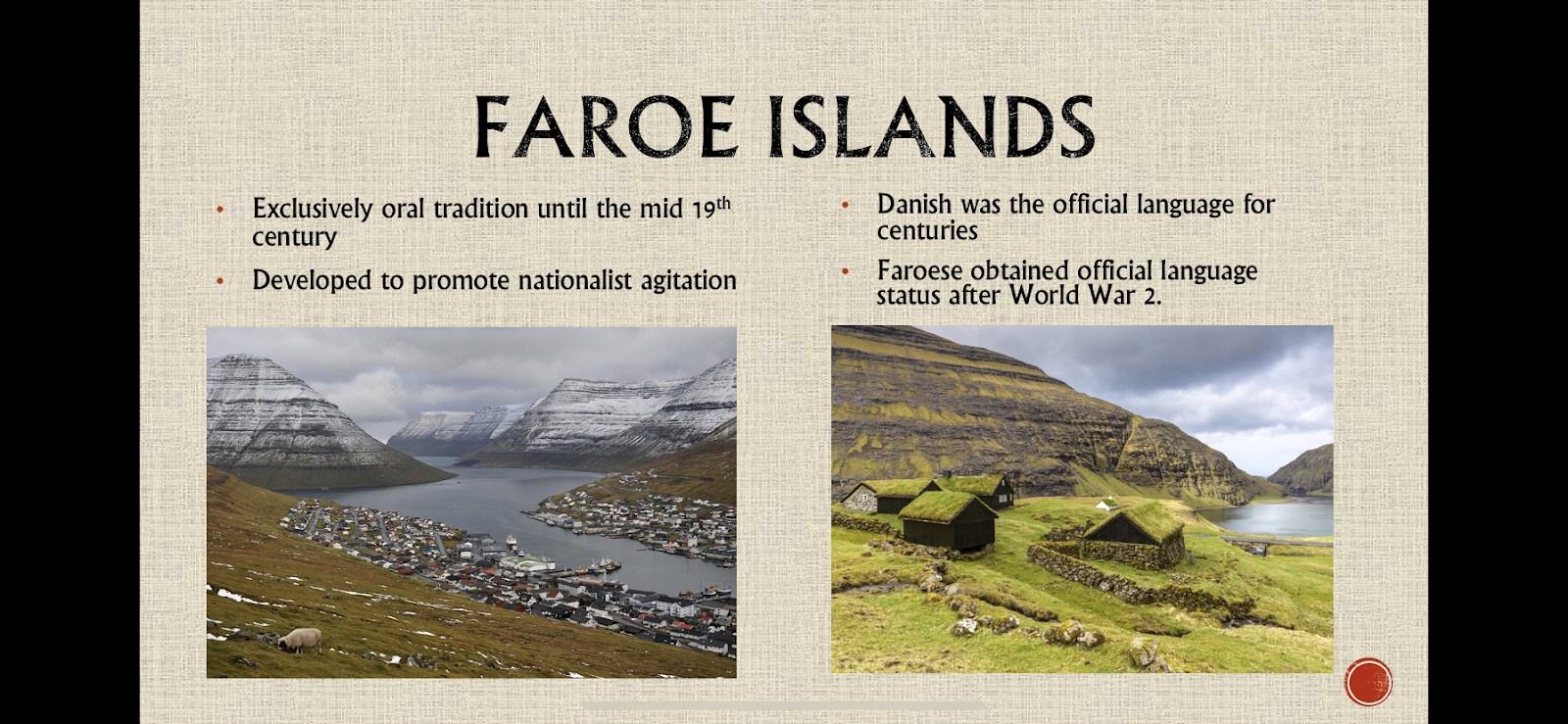
The Faroe Islands fascinate me-- they are on my bucket list-- and their literary/cultural history is exceptionally unique.

Roam the Faroe Islands

Horrible Histories: Vicious Vikings

Horrible Histories... I stumbled across this BBC television program several months ago and fell head over heals into it. The fun part is my kids-- all four of them-- love it just as much. It's my greatest disappointment to not have all my love of history rub off on at least one child so far, but this show has them watching history voluntarily. And it's the most ridiculous sort of history. For those of you who follow this blog, the unfortunate part, is that Horrible Histories is not on YouTube. In my notes on this course I'm teaching, I will specify which episode I've used and the times on the episode. It's up to you to find it on Amazon Prime or other outlets that have it. I will link to the youtube videos that I've added to this course to supplement the history. 


For the first class, now two weeks ago, we began with Vicious Vikings.

The Viking Age began with the raid at Lindisfarne in Northumbria, England.

This video is the 10 Minute History: The Viking Age. It covers Viking beginnings and their raids. Vikings raided the coasts of England, Scotland, and Ireland regularly over several hundred years.

  • Horrible Histories, Season 1, Episode 13, minutes 19:25-23:30. The Viking Report, Stupid Deaths: Sigurd the Mighty, and Viking words in the English language.

  • Horrible Histories, Season 1, Episode 9, minutes 11:47-13:55.
    • London Bridge is Falling Down is a nursery rhyme about a Viking raid on London.

  • Horrible Histories, Season 2, Episode 9, minutes 5:02-9:00. Viking Sports and Feuds.

  • Horrible Histories, Season 2, Episode 8, minutes 0:35-3:52. Viking makeup and monastery raids.

Monasteries were easy pickings when it came to Viking raids. The Viking Raid on Lindisfarne began the Viking Age in 793 CE. The Lindisfarne Gospels survived the first and many other raids, and the manuscripts are considered the greatest Old English/Anglo-Saxon writings to survive. Here is a facsimile of the Lindisfarne Gospels. The ornate cover was lost during a raid but was replaced in 1852.

Also, like the Lindisfarne Gospels, the Book of Kells, was also an illuminated manuscript of the four gospels. Written about 800 CE, the manuscripts survived a Viking raid at Kells Abbey in Ireland. The manuscript is now located in Trinity College in Dublin, Ireland, and has been house there since 1661.

  • Horrible Histories, Season 1, Episode 11, minutes 14:22- 18:02. The oral tradition of the Vikings in rhymes. 


British Literature: Anglo-Saxon Period

Note: The following pictures are screenshots of the lecture and the links underneath the applicable slides will take you to youtube to view the video at was imbedded to the PowerPoint. Between Blogger, PowerPoint, and my computer system, imbedding the PowerPoint presentation with workable (also imbedded) links was becoming a nightmare.

So here we go: British Literature.


Dates denoting eras or periods of literature are generally fluid. When they were specific, it's usually from a definite historical point.

  • The Anglo-Saxon period ends in 1066 with the Battle of Hastings when the Anglo-Saxons were defeated by William the Conqueror, replacing/adding to the literary traditions with Norman influence.
  • The Romantic Period was a direct response to the societal changes brought on by the Industrial Revolution, so its dates are more fluid on when that literary time period began.
  • The Victorian Period coincides with the reign of Queen Victoria, and also those societal changes. Fluid, yet fixed in some regards.
  • The Modern and Postmodern Periods both have their beginnings in the World Wars. The literary output is a direct response to living through these times of upheaval. A definite beginning, and yet not having found an end.
So we begin... The Ango-Saxon Period...


What makes the Anglo-Saxon period of literature and language unique? 


The literary output is mainly poetry in this era. Typically religious in nature as monks were the literary authority for most of Europe at this point in time. Caedmon and Cynewulf were both liturgical poets. The Venerable Bede, who wrote Ecclesiastical History of the English People in 731 CE, also wrote of Caedmon as the founder of the school of Christian poetry. This poetic period of the Old English/Anglo-Saxon era is known as "Caedmonian."

The page above of the Lindisfarne Gospels is what's known as an illuminated text. Like the Book of Kells, this Lindisfarne Gospels contain the four gospels. Unlike the Book of Kells, which is written in Latin, the Lindisfarne Gospels were written in Old English. The Chi Rho page above is from this manususcript. The picture to the right is a mosaic of the Bede.

The importance of Anglo-Saxon language and literature: (The woman speaking is exceptionally expressive facially, but many noteworthy things to say.)


Next slide is a recitation of Caedmon's Hymn in Old English, a sound completely foreign to us "English" speakers. 


Translation: 
Now must we praise heaven's kingdom the Keeper
Of the Lord the power and his wisdom
The Work of the Glory-- Father, as he of marvels each,
The eternal Lord, the beginning established.
He first created of earth for the sons
Heaven as a roof, the Holy Creator
Then the middle-enclosure of mankind the Protector
The eternal Lord, thereafter made
For men, earth the Lord Almighty.


Other than the poetry of this era, we have the greatest epic tales of all time... Beowulf


Epics and Heroes, Beowulf set the pattern for all subsequent epic tales.


Monday, May 6, 2019

The Third Reich & The Holocaust, Week Eight: Liberation, Trials, & Aftermath

Over the course of this semester, our study of the Holocaust began with a Band of Brothers clip of the liberation of Dachau. At the time, I wanted to get the feel of seeing the camps for the first time like those Americans did and then grow the class around how it happened, why, the legacy of the holocaust. This first clip, is mostly stuff we've covered but puts it firmly into our timeline here at the end.

What is the Holocaust Part 7/7: Perfecting Industrial Murder (1942-1945)

As the Allies move east, and the Soviets move west, the camps were liberated. So the question of "Now what?" moves through the masses of displaced people.

Holocaust Survivors: First Steps in the DP Camps and New Beginnings

After liberation and the end of the war, Germany was divided up by the Allies, but what happened to the leaders of the Nazis? The Nuremberg Trials.

What Happened at the Nuremberg Trials?

One of the largest areas of academic study of the Holocaust is human healing, memory, and the roles people played in the inception of Nazi ideology to genocide. There are two terms that came with this study in regards to Germans and Nazis: collective guilt versus individual responsibility. Many times history is just as guilty of handing out judgement based on culture and ethnicity as the Nazis or other groups that categorize broadly. The collective guilt in reference to this section of history says that no matter what role a German played-- perpetrator or bystander or even actively resistant-- the guilt belongs to society as a whole. Individual responsibility leaves it to what it says, the individual. But the problem many faced was a marshland of accusations-- some claiming they were resistant to save face or coming out against Nazism after its fall. Typically, most historians fall back on collective guilt in regards to the Holocaust-- whether "fair" or not. I can see the merits of both trains of thought, but in this aftermath, it was clear that shame and guilt should be applied broadly to make sure it never happened again. I think of the moment when Eisenhower forced the citizens of towns near concentration camps to walk through the terrors, to witness the bleakness of humanity's lowest point. It was unfathomable to suggest that these people had no idea what was happening.

These photos are of the Memorial to the Murdered Jews of Europe, located in Berlin, Germany. It is designed to look orderly, but once you move into the blocks, it becomes disorientating.The further in you walk, the taller the blocks become giving you the feeling that you are lost within order. 


As a result of assigning collective guilt, the shame of the Holocaust has come down through the descendants of the perpetrators and the victims, casting a shadow even today.

How Germany Grapples with its Dark Nazi Past

The Third Reich and the Holocaust are part of the German conscience today. This next clip is of Flula Borg on the Conan Show. We began the clip at 0:50 and watched to the end. It's interesting to see how the taint of that history stays with the younger generations. This clip is from last summer.

Flula Borg's Favorite Action Film is Die Hard- Conan on TBS

We made it to the end. We've spent time on the details, on the human elements, and the infinite number of why's. What do we do with this information? Should we do anything with it? Antisemitism and Nazism are not dead. Genocide is rampant around the world, and neo-Nazism is on the rise.

Elie Wiesel, the author of this semester's book closes the class out.

Elie Wiesel: Universal Lessons


Modern Euro 2, Week Eight: End of the War & Aftermath

Timeline:

1945


  • 17 January: Soviets push west and take Warsaw
  • 26 January: Soviets liberate Auschwitz
  • 4-14 February: Yalta Conference
  • 13-14 February: Dresden firebombing/firestorm
  • 7 March: Allies take Cologne
  • April: Allies find stolen art in salt mines
  • 12 April: President Roosevelt dies in office; Truman becomes President of the US
  • 16 April: Battle of Berlin begins; Americans enter Nuremberg
  • 28 April: Mussolini captured and hanged by Italian bipartisans
  • 30 April: Hitler commits suicide
  • 2 May: German troops in Italy surrender
  • 7 May: unconditional German surrender
  • 8 May: VE (Victory in Europe) Day
  • 5 June: Allies divide Germany and Berlin
  • 16 July: atomic bomb test; Potsdam Conference
  • 6 August: atomic bomb dropped on Hiroshima
  • 8 August: Soviet invasion of Manchuria and declaration of war against Japan
  • 9 August: atomic bomb dropped on Nagasaki
  • 14 August: unconditional Japanese surrender
  • 2 September: VJ (Victory over Japan) Day
Other dates:

  • 5 March 1946: Iron Curtain
  • 13 August 1961 to 9 November 1989: The Berlin Wall
Timeline: Cities at War- Berlin -- We watched minutes 41:10 to 48:45. This clip shows the battle of Berlin and the civilian population versus the Soviets. The battles of the Eastern Front were markedly more violent than those of the Western Front, as the two cultures, ideologies, and politics were a stark contrast. Also the Soviets firmly put forth the "turn about fair play" concept-- what Nazi Germany did to the Soviets would be equalled if not worse. 

Modern day Berlin still shows the leftover scars of street battles.


The end of the war came-- 8 May 1945-- but then what? The beginning of a new power struggle and the continuing war of ideologies. The Cold War.

It seems apropos to end two semesters of Modern European History with links from Indie Neidell, who brought us many of the concepts I used.

Zero Hour: Origins of the Cold War


The Reichstag was left in ruins following the war and fell into disuse. Restorations were made after the reunification in 1990,  and the cupola was an addition that is modern in concept. As you walk up the inside of the glass cupola, the idea is that the German government is transparent and the people are above the government; you can look down into Parliament from above.


And we go out with a bang-- if only Monty Python was born decades earlier we could have avoided this mess. Monty Python's Funniest Joke in the World

Additional links:

Footage of pictures taken during WW2 and superimposed on current photos-- I've found these to be fascinating; to see the greatness and the tragedy of war over the life that is today. Then and Now- WW2 Edition.

I briefly mentioned in the time line the stolen art that was found in the salt mines. I highly recommend the movie Monuments Men, a film that depicts the story of the Allied unit of men send out to find and make safe the art of the world.